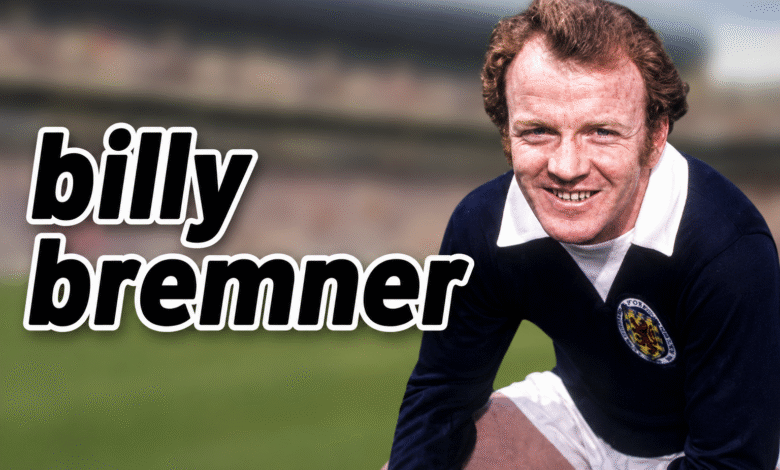
Introduction
Billy Bremner was one of the most influential footballers in British football history. Known for his fearless attitude, exceptional leadership, and relentless energy, he became the driving force behind Leeds United during the club’s most successful period. Despite being shorter than many of his opponents, Bremner never allowed his physical size to limit his ambitions or performance.
His career was filled with remarkable victories, major trophies, and international recognition. However, it also included painful defeats, controversial moments, and managerial challenges. This combination of success and struggle made Billy Bremner a complex and unforgettable football figure whose legacy remains deeply connected to Leeds United and Scottish football.
Quick Bio
| Information | Details |
|---|---|
| Full Name | William John Bremner |
| Famous Name | Billy Bremner |
| Date of Birth | 9 December 1942 |
| Birthplace | Raploch, Stirling, Scotland |
| Nationality | Scottish |
| Profession | Footballer and Football Manager |
| Playing Position | Midfielder |
| Height | 1.65 metres or 5 feet 5 inches |
| Senior Career Start | Leeds United |
| International Team | Scotland |
| Scotland Caps | 54 |
| Scotland Goals | 3 |
| Date of Death | 7 December 1997 |
| Age at Death | 54 years |
Billy Bremner’s Early Life
Billy Bremner was born as William John Bremner on 9 December 1942 in Raploch, Stirling, Scotland. He grew up in a working-class community where football played an important role in everyday life. From an early age, he displayed energy, confidence, and a strong competitive spirit that later became central to his playing style.
He attended St Mary’s Primary School and St Modan’s High School in Stirling. Bremner developed his football ability while playing for local teams, including Gowanhill United. His performances attracted attention from professional clubs, and he eventually joined Leeds United as a young player in 1959.
Start of Billy Bremner’s Football Career
Billy Bremner began his professional journey with Leeds United and made his first-team debut in January 1960. He initially played as a winger, but his role changed after Don Revie became manager. Revie recognised Bremner’s strength, intelligence, passing ability, and determination, moving him into central midfield.
The change proved highly successful. Bremner became increasingly important to the team and developed into a complete midfielder. He could win possession, create chances, support attacks, and motivate teammates. His aggressive but committed approach made him difficult for opponents to handle.
Billy Bremner’s Leeds United Career
Rise to Club Captain
Bremner became captain of Leeds United in 1965. His leadership helped transform the club from a developing team into one of the strongest sides in English football. He demanded effort from every player and led by example through his tackling, movement, passing, and determination.
Under Don Revie, Leeds United became known for discipline, organisation, and competitiveness. Bremner represented all these qualities. He was not only the captain but also the emotional centre of the team, often influencing the result through his energy and refusal to accept defeat.
Major Trophies and Achievements
During Billy Bremner’s time at Leeds United, the club won the First Division title in the 1968–69 and 1973–74 seasons. Leeds also won the Second Division championship in 1963–64, the FA Cup in 1971–72, and the League Cup in 1967–68.
The club achieved European success by winning the Inter-Cities Fairs Cup twice, in 1967–68 and 1970–71. Bremner also helped Leeds win the FA Charity Shield in 1969. These achievements established him as one of the most successful captains in the club’s history.
Playing Style and Leadership Qualities
Billy Bremner was famous for his strength, even though he stood only 5 feet 5 inches tall. He was an energetic midfielder who combined technical skill with physical commitment. His passing, positioning, ball control, tackling, and understanding of the game allowed him to control important areas of the pitch.
His positive qualities included courage, loyalty, discipline, and leadership. However, his aggressive playing style sometimes caused controversy and led to disciplinary problems. Bremner played in an era when football was extremely physical, and his intense personality often made him both admired and criticised.
Billy Bremner’s Scotland Career
Billy Bremner represented the Scotland national team between 1965 and 1975. He earned 54 international caps and scored three goals. His performances and leadership resulted in him being appointed captain of his country.
One of his greatest international achievements was captaining Scotland at the 1974 FIFA World Cup. Scotland completed the group stage without losing a match but were eliminated on goal difference. Although the outcome was disappointing, Bremner’s role in leading his country at the tournament remained a significant achievement.
Departure from Leeds United
Billy Bremner left Leeds United in 1976 after spending around 16 years in the senior team. He made 587 league appearances and scored 91 league goals for the club. His departure marked the end of an extraordinary era for both the player and Leeds United.
After leaving Leeds, Bremner joined Hull City. He played there from 1976 to 1978 before moving into football management. Although his time at Hull was less successful than his Leeds career, it allowed him to continue playing at a professional level.
Billy Bremner’s Management Career
Doncaster Rovers
Bremner began his management career with Doncaster Rovers in 1978, initially serving as player-manager. He achieved promotion from the Fourth Division during the 1980–81 season and later guided the club to another promotion in 1983–84.
His work at Doncaster demonstrated that he could transfer some of his leadership qualities from playing into management. He built competitive teams and developed a close connection with the club, eventually returning for a second spell between 1989 and 1991.
Leeds United Manager
Billy Bremner returned to Leeds United as manager in 1985. His appointment was emotionally important because of his legendary status at the club. He attempted to restore the fighting spirit and discipline associated with Leeds during his playing career.
However, his managerial period at Leeds was challenging. The club failed to return to the First Division, although it came close to promotion. Bremner left the position in 1988, showing that success as a legendary player does not always guarantee success as a manager.
Personal Life and Family
Billy Bremner married Veronica Dick in November 1962. The couple had three children and remained together until his death. Although Bremner was known for his fierce personality on the football pitch, former teammates frequently described him as friendly, loyal, and generous away from the game.
His family life remained relatively private compared with his football career. There is no reliable public evidence confirming a specific net worth, salary, major business ownership, or company portfolio. His recognised professional income came mainly from football and football management.
Death of Billy Bremner
Billy Bremner died on 7 December 1997 at his home in Clifton, Doncaster. He was 54 years old and died only two days before his 55th birthday. His death followed a period of illness involving pneumonia and a suspected heart attack.
The football community responded with widespread sadness. Former teammates, supporters, managers, and football organisations paid tribute to his contribution to the game. His death was particularly emotional for Leeds United fans, who regarded him as a symbol of the club’s greatest era.
Billy Bremner’s Legacy
Billy Bremner’s legacy is most strongly associated with Leeds United. He was voted the club’s greatest-ever player and remains a symbol of leadership, determination, and loyalty. A statue of Bremner stands outside Elland Road, where supporters continue to honour his contribution.
He was also inducted into the English Football Hall of Fame and the Scottish Football Hall of Fame. His inclusion among the Football League’s 100 Legends further confirmed his place in football history. Billy Bremner remains an inspiration because he proved that determination, intelligence, and courage can overcome physical disadvantages.
Conclusion
Billy Bremner was far more than a successful midfielder. He was a captain, motivator, competitor, and football icon who helped shape the identity of Leeds United. His trophy-winning career, international leadership, and influence on teammates made him one of the most respected British footballers of his generation.
Although his career included defeats, controversies, and managerial disappointments, these negative experiences did not erase his extraordinary achievements. His fearless character, loyalty, and leadership ensured that Billy Bremner would be remembered long after his final match.
Frequently Asked Questions
What was Billy Bremner’s full name?
His full name was William John Bremner.
When and where was Billy Bremner born?
He was born on 9 December 1942 in Raploch, Stirling, Scotland.
How tall was Billy Bremner?
Billy Bremner was approximately 1.65 metres, or 5 feet 5 inches tall.
Which club is Billy Bremner most famous for?
He is most famous for playing for and captaining Leeds United.
How many matches did Billy Bremner play for Scotland?
He earned 54 senior international caps for Scotland.
Did Billy Bremner play in the FIFA World Cup?
Yes, he captained Scotland at the 1974 FIFA World Cup.
What trophies did Billy Bremner win with Leeds United?
He won two First Division titles, the FA Cup, the League Cup, two Inter-Cities Fairs Cups, the Second Division title, and the FA Charity Shield.
Did Billy Bremner manage Leeds United?
Yes, he managed Leeds United between 1985 and 1988.
What was Billy Bremner’s net worth?
No reliable public source confirms his exact net worth.
When did Billy Bremner die?
Billy Bremner died on 7 December 1997 at the age of 54.