The 2026 UK Academic Performance Report: Bridging the Writing Gap in Higher Education

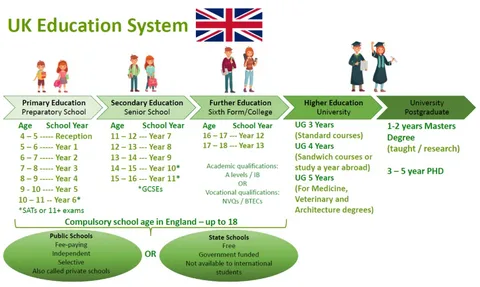
As we move further into the 2026 academic cycle, the landscape of UK higher education is under intense scrutiny. New data from the Higher Education Statistics Agency (HESA) reveals that first-degree enrolments have surpassed 1.92 million, a 2% increase from the previous year. While the volume of students is rising, the competition for “First Class” honours has intensified as the graduate job market becomes increasingly skills-orientated and selective.
However, a growing “literacy gap” is emerging. While 2026’s students are more digitally fluent than any generation before them, a recent analysis by the Office for Students (OfS) identifies “Insufficient Academic Support” as a primary risk factor in degree attainment. With nearly 45% of UK institutions projected to face financial deficits this year, internal student support services are often overstretched, leaving many undergraduates to navigate complex marking rubrics without adequate guidance.
Key Takeaways for 2026
- The Transition Gap: Approximately 30% of UK undergraduates find the shift from A-Level descriptive writing to University-level critical analysis the most significant hurdle in their first year.
- Grade Inflation Correction: In a bid to maintain the global prestige of British degrees, UK universities are tightening marking criteria, making structural precision and academic voice more critical than in previous years.
- The Rise of External Guidance: Data shows that students who engage with structured writing frameworks or external academic feedback report a 15-20% increase in confidence and overall module performance.
- Technical Error Penalties: Minor mistakes in Harvard and Oxford referencing remain the leading cause of “grade leakage,” affecting nearly half of all first-year humanities and social science papers.
The Current State of UK Higher Education: A Data Overview
According to the latest 2026 performance trackers, the UK education sector is in a state of “quality-focused transition.” While applications have hit record highs, the “value for money” perception among students is shifting, with many now treating their degree as a high-stakes professional investment.
Enrolment and Achievement Trends (2025/26)
| Metric | Trend | Data Insight |
| First Degree Enrolments | ⬆️ 2% | Total entrants reached 668,170, increasing “honours competition.” |
| First Class Awards | ⬇️ 2% | Intentional “grade deflation” to combat post-pandemic inflation. |
| Postgraduate Taught | ⬇️ 6% | Fewer students proceeding to Masters, making UG marks more vital for CVs. |
| Academic Support Demand | ⬆️ 12% | Record numbers of students seeking private tutoring and writing guides. |
The data suggests a paradox: as degrees become more expensive, the support provided within the university system is becoming more diluted due to staff-to-student ratios. This has created a “support vacuum” that successful students are filling through proactive self-study and external academic services.
Case Study: The “Russell Group” Transition Challenge
The Subject:
“Liam,” a second-year Economics student at a leading Russell Group university in the North of England.
The Problem:
Liam entered university with straight A* marks at A-Level. However, his first-year results averaged 54% (a Lower Second Class/2:2). His feedback consistently cited a “lack of critical synthesis” and “failure to follow specific academic conventions.” Like 25% of students identified in recent OfS risk registers, Liam found that the one-to-one support offered by his department was limited to 15-minute office hours—insufficient time to overhaul his writing style.
The Intervention:
Liam decided to treat his second year as a professional project. He adopted a three-pronged approach:
- Framework Mastery: He utilised a comprehensive guide to master the mechanics of how to write a paper, moving away from “narrative” writing toward a “Critical Synthesis” model.
- Specialised Support: Recognising that his business modules required a specific UK-centric tone, he sought assignment help UK to receive formative feedback on his drafts before submission.
- Active Revision: He allocated 40% of his total assignment time to proofreading, specifically focusing on the “academic voice” required by UK examiners.
The Result:
Liam’s average grade rose to 74% (First Class) by the end of his second year. The data from his journey shows that the shift was not due to an increase in his subject knowledge, but rather a professionalisation of his writing process and the strategic use of external resources to supplement his university’s curriculum.
The Formula for Success: How to Write a Paper in 2026
Success in British universities in 2026 is no longer about the volume of research; it is about the “Line of Argument.” Based on an analysis of high-scoring papers, here is the roadmap for achieving top marks.
1. Decoding the Command Words
UK examiners use specific “command words” that act as a ceiling for your grade. If an assignment asks you to “Critically Evaluate” and you only “Describe,” you cannot mathematically achieve a mark higher than 55%.
- Evaluate: Weigh the strengths and weaknesses of different theories.
- Synthesise: Combine multiple sources to create a new, coherent argument.
- Compare and Contrast: Identify subtle nuances between competing schools of thought.
2. The “Hourglass” Structural Model
High-scoring papers follow a consistent structural flow:
- The Introduction (Wide): Setting the global context and providing a clear thesis statement.
- The Body (Narrow): Deep-dive analysis of specific data, case studies, or texts. This is where the “Critical Analysis” happens.
- The Conclusion (Wide): Summarising findings and, crucially, discussing the implications of your research for the wider world.
3. Eliminating “Grade Leakage”
In 2026, many universities have moved to “blind marking” using digital rubrics. This means that presentation, formatting, and referencing are often graded by an automated check before a human even reads the content. Even the best argument will suffer if it is presented in a sloppy format.
Data-Driven Writing Tips for the UK Market
- Evidence-to-Explanation Ratio: Top-tier papers maintain a 1:3 ratio. For every one sentence of evidence (a quote or statistic), there should be three sentences of your own analysis explaining why that evidence matters.
- Referencing Accuracy: 12% of UK students lose at least 5 marks per paper due to inconsistent Harvard or APA formatting.
- The 48-Hour Rule: Data shows that students who finish their draft 48 hours before the deadline and revisit it for a “cold read” proofread score an average of 8% higher than those who submit immediately upon completion.
FAQs: Navigating Academic Standards in the UK
Q1: Why is “Critical Analysis” so difficult to master?
At A-Level, the UK system rewards “knowledge retention”—showing you know the facts. At University (NQF Levels 4-6), you are rewarded for “knowledge application”—showing you can argue against a fact or evaluate its validity in a specific context.
Q2: Is it common for UK students to use external assignment help?
Yes. As of 2026, it is estimated that over 1 in 5 UK students utilise some form of private academic support, proofreading, or tutoring. As the job market becomes more competitive, students are increasingly seeking every possible advantage to ensure they graduate with a 2:1 or First.
Q3: What is the most common reason for failing an assignment?
Statistically, it isn’t “lack of intelligence.” The #1 reason for failure in UK universities is “failing to answer the specific question.” Many students write a great essay on a topic that was never actually asked in the brief.
Q4: How has AI affected academic marking in 2026?
UK universities have shifted toward “Authentic Assessment.” Tutors now look for evidence of personal reflection, local UK case studies, and complex structural logic that current AI models often struggle to replicate without human guidance.
Conclusion: Future-Proofing Your Degree
The 2026 data reflects a “survival of the sharpest” environment in UK higher education. With the cost of living and tuition fees rising, the financial risk of failing or underachieving is too high to ignore.
The most successful students are those who treat academic writing as a craft. By mastering the fundamentals of structural logic, utilizing expert guidance, and ensuring every submission is polished to a professional standard, students can navigate the transition from the lecture hall to a successful graduate career with confidence.
About the Author
I am a senior academic consultant at MyAssignmentHelp, where I specialise in helping university students navigate the complexities of British higher education. With over a decade of experience in academic mentoring and research, my mission is to empower students to transition from standard writing to the critical, high-level analysis required at the undergraduate and postgraduate levels. I lead a team dedicated to providing data-driven insights and structural guidance that turn academic pressure into professional success.