Diamond Watches for Women — What PASCAL Gets Right That Most Brands Get Wrong

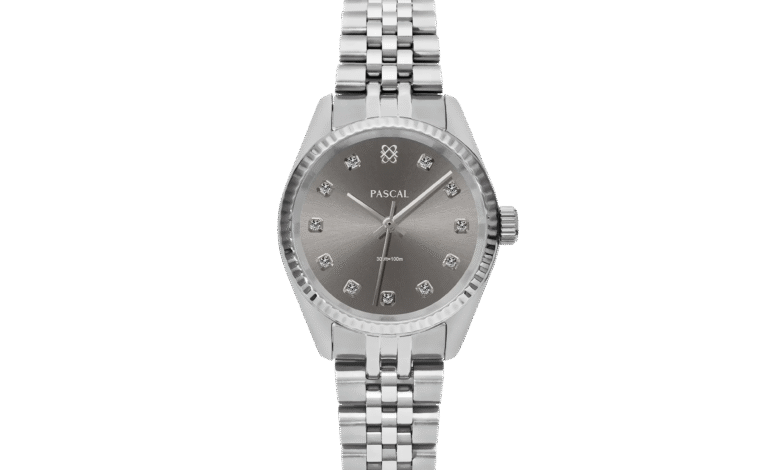
The women’s diamond watch market has a persistent design problem: the pieces that photograph best are often the ones that wear worst. A fully pavéd dial looks spectacular in a lightbox with a perfect camera angle. On a wrist, in natural light, while actually being used to check the time between tasks, it’s often illegible and sometimes uncomfortable. The industry has been optimizing for the photograph for decades.
The alternative is harder to achieve: a diamond watch that performs as a watch first and signals luxury second, where the stones are working with the design rather than overwhelming it. This requires editorial discipline — deciding where diamonds help the piece and where they undermine it.
The Legibility Problem Nobody Discusses
A heavily pavéd dial loses its primary function. Hour markers disappear into the background of stones. Hands become indistinguishable from the sparkle at a glance. Reading the time requires effort — a stop rather than a check. This matters because a watch that requires effort to use is a watch that gets left at home, or replaced by a phone.
PASCAL’s approach to PASCAL female diamond watches inverts this priority. Diamonds appear where they serve the design — bezel positions, selected hour markers, crown accents — never in positions that compromise the dial’s readability. The result is a watch you can use as intended while appreciating the stones in the same glance. The time is readable. The quality is visible. Neither competes with the other.
Where PASCAL Places Stones — and Why It’s a Design Decision
The Paradoxe collection frames the dial with a continuous bezel-set circuit of lab-grown diamonds — full presence around the perimeter, clean face inside. The Timeless Classic uses diamond hour markers at the primary index positions, keeping the rest of the dial open and legible. The Oval collection combines select bezel accent points with marker stones. Each placement choice is deliberate: where does sparkle enhance the form, and where does it compete with it?
This kind of editorial restraint is harder to execute than covering as much surface area as possible. It requires deciding what the watch is for and building toward that function rather than maximizing a quantifiable specification (carat weight) that looks good on a product listing.
Stone Quality and What It Actually Means Daily
PASCAL uses lab-grown diamonds graded D-F color and VVS-VS clarity across their women’s collection. D-F color means colorless to near-colorless — no discernible yellow or brown tint under normal viewing conditions. VVS-VS clarity means very slight to slight inclusions visible only under 10x magnification, not to the naked eye.
These grade levels matter most in natural light — exactly where a daily watch operates. Lower-grade stones (G-H color, SI clarity) look acceptable in photographs and in dim interior light. In direct sunlight, outdoors, or under window light, the color and inclusion differences become apparent. A D-F VVS stone sparkles clearly under all lighting conditions. That’s what you’re wearing every day.
The Practical Test for a Daily Diamond Watch
The practical test is simple: do you put it on without thinking about it? A watch that requires consideration — is this occasion appropriate for this watch? — isn’t functioning as an everyday piece. It’s functioning as special-occasion jewelry.
The construction specifications for daily wear: 3 ATM water resistance minimum (handwashing, light rain), stainless steel case (not zinc alloy, which corrodes), mineral or sapphire crystal dial protection, and a movement rated to at least ±15 seconds per month accuracy. PASCAL meets all four across their women’s diamond collection, with a 24-month warranty and 60-day return window that makes the initial purchase lower-risk.