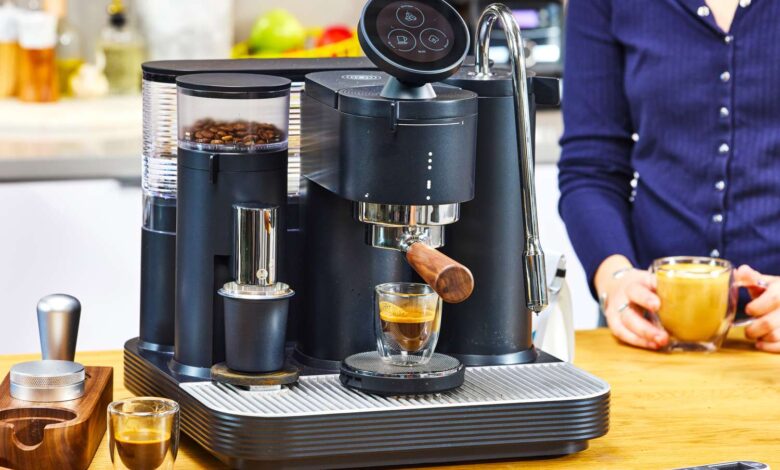
There is a quiet revolution happening in home kitchens. As more people fall in love with specialty coffee, manual espresso machines are making a strong comeback. These lever-driven brewers strip espresso down to its essentials and hand full control back to you. If you have ever wanted to slow down, understand your coffee, and pull a shot you genuinely crafted, this guide is for you.
Below, we cover what a manual espresso machine is, how it works, why coffee enthusiasts love it, and how it compares to automatic alternatives, so you can decide whether hands-on brewing belongs on your counter.
What Is a Manual Espresso Machine?
A manual espresso machine, often called a lever espresso machine, is a brewer that relies on your own physical effort to force hot water through finely ground coffee. Instead of a pump and a circuit board deciding the pressure for you, you push or pull a lever to generate the roughly nine bars of pressure that define a true espresso.
The result is a concentrated shot topped with crema, made entirely on your terms. There are no preset buttons and no automated timers, just you, your coffee, and the brew. That simplicity is exactly why these machines have earned a devoted following among home baristas.
How Does a Manual Espresso Machine Work?
The process is refreshingly transparent. You grind fresh coffee beans, dose them into a portafilter, and tamp the grounds into an even puck. Hot water (ideally around 90–96°C) is added, and then you apply pressure with the lever. As you press, water is driven through the coffee bed, extracting oils, sugars, and aromatic compounds into the cup.
Because you control the speed and force of the press, you directly shape the espresso extraction. Ease into the shot with a gentle pre-infusion, then build pressure, and you can tease out sweetness and balance that a one-touch machine simply cannot replicate.
Why Coffee Enthusiasts Prefer Manual Brewing
Manual brewing turns a routine into a ritual. For many coffee lovers, that engagement is the entire point. You feel the resistance of the puck, watch the crema form, and learn to read each shot. Over time, this builds real barista skills and a deeper appreciation for the craft behind artisan coffee.
There is also a tactile honesty to it. When a shot runs too fast or too bitter, you know it was your grind, dose, or technique, and you can adjust the next one. That feedback loop makes you a better brewer surprisingly quickly.
Benefits of Manual Espresso Machines
The advantages go well beyond romance. Manual machines offer:
- Total control over extraction. You fine-tune pressure, flow, and timing for every shot.
- Durability. With few or no electronic parts, lever machines tend to last for years and resist mechanical failure.
- Portability. Many models are compact and travel-friendly, perfect for small kitchens or trips.
- Value. You can reach genuinely excellent espresso without the price tag of a high-end automatic.
- A quieter, more mindful routine. No grinding motors mid-brew, just a calm, deliberate process.
If you are ready to explore your options, it helps to browse a curated range of espresso machines for hands-on brewing to see how different lever designs and build qualities compare before you commit.
Manual vs Automatic Espresso Machines
The honest answer is that neither is universally better; they serve different priorities.
Automatic and semi-automatic machines prize convenience and consistency. Press a button, get a reliable shot, and move on. They are ideal for busy mornings and households where speed matters most.
Manual machines prize control and craft. They ask more of you and reward you with a more personal cup. They also typically cost less to buy and maintain, since there is less to break. The trade-off is a learning curve and a little more effort per shot. If you enjoy the process and want to understand your coffee, manual wins. If you only want fast, fuss-free espresso, automatic may suit you better.
Essential Features to Consider Before Buying
When choosing your first manual espresso machine, weigh these factors:
- Build quality and materials. Stainless steel and high-grade aluminium last longer than thin plastic.
- Pressure control and feedback. A built-in pressure gauge helps you learn consistent shots faster.
- Ease of cleaning. Simple, removable parts make daily maintenance painless.
- Portability. If you travel, prioritise a lightweight, compact design.
- Compatibility with your grinder. Espresso demands a fine, consistent grind, so a quality coffee grinder is essential.
Remember that the machine is only half the equation. Without a good grinder and fresh coffee beans, even the finest lever machine cannot shine.
Tips for Brewing Better Espresso at Home
A few habits will dramatically improve your home espresso brewing:
- Grind fresh, every time. Buy whole beans and grind just before brewing to protect aroma and flavour.
- Dial in your grind size. If the shot pours too fast and tastes sour, grind finer; too slow and bitter, grind coarser.
- Tamp evenly. A level, firm tamp prevents channeling and uneven extraction.
- Mind your water temperature. Aim for around 90–96°C for balanced flavour.
- Weigh your inputs. A simple scale and a target ratio (roughly 1:2 coffee to liquid espresso) brings repeatable results.
Common Mistakes Beginners Make
Most early frustration comes from a handful of fixable errors: using stale, pre-ground coffee; tamping unevenly; skipping pre-infusion; chasing a perfect shot without changing one variable at a time; and neglecting to clean the machine. Treat your first weeks as practice, change one thing per shot, and keep simple notes. Progress comes faster than you expect.
How Should You Maintain a Manual Espresso Machine?
Maintenance is straightforward. Rinse the portafilter and basket after each use, wipe down seals, and periodically deep-clean the brew components according to the manufacturer’s guidance. Because manual machines have so few moving parts, regular rinsing and the occasional descale (where applicable) are usually all they need to perform well for years.
Final Thoughts
Manual espresso machines reward patience with flavour, skill, and a more connected coffee experience. They are durable, affordable, and endlessly satisfying for anyone who wants to truly understand espresso rather than simply consume it. If you value craft over convenience, hands-on brewing offers a path to café-quality coffee that genuinely feels like your own.
Frequently Asked Questions
What is a manual espresso machine? A manual espresso machine is a lever-operated brewer that uses your physical effort, rather than an electric pump, to force hot water through ground coffee and produce a concentrated espresso shot with crema.
Are manual espresso machines good for beginners? Yes. While there is a short learning curve, the transparency of the process actually helps beginners understand extraction quickly. Starting with fresh beans, a decent grinder, and patience makes early results very rewarding.
Do you need a special grinder for a manual espresso machine? You need a grinder capable of a fine, consistent espresso grind. A quality burr coffee grinder is essential, since inconsistent or coarse grounds will undermine even the best machine.
Is manual espresso better than automatic? It depends on your priorities. Manual machines offer more control, durability, and craft at a lower price, while automatic machines offer speed and consistency. Neither is universally better.
How much pressure does a manual espresso machine produce? Most lever machines are designed to reach around nine bars of pressure, the benchmark for traditional espresso, which you generate and control by hand.
How long does it take to learn manual espresso brewing? Many home baristas pull a satisfying shot within their first week and refine consistency over a few weeks of regular practice, especially when adjusting one variable at a time.
How do I clean and maintain a manual espresso machine? Rinse the portafilter and basket after each use, wipe seals, and deep-clean components periodically. With few moving parts, these machines need minimal upkeep to last for years.