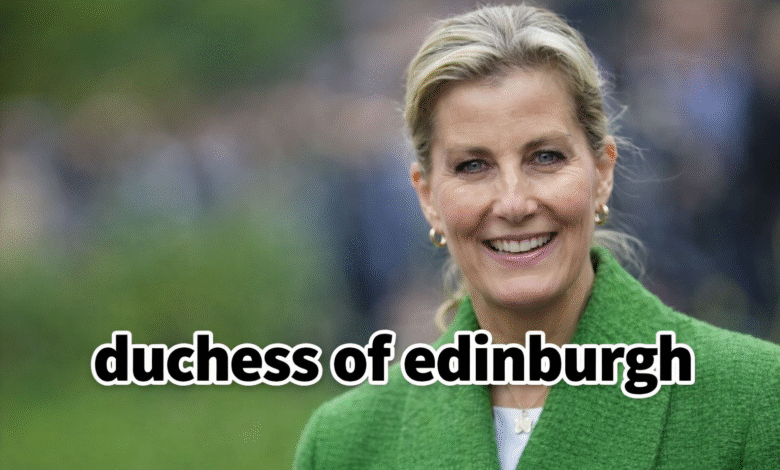
duchess of edinburgh — A Powerful Life of Duty, Dignity, and Determined Service

Introduction
The duchess of edinburgh stands as a compelling example of modern royalty shaped not by birthright alone, but by work ethic, adaptability, and sustained public service. Admired for her calm authority and consistency, she has built a reputation as one of the most reliable senior royals of her generation. Her journey reflects both positive strength and the challenges that accompany life under constant public scrutiny.
In an era where royal relevance is frequently questioned, the duchess of edinburgh represents stability and purpose. While her role is not without criticism or pressure, her long-term commitment to charitable work and diplomacy has positioned her as a trusted figure within the institution.
Early Life and Background
Born Sophie Helen Rhys-Jones on 20 January 1965 in Oxford, England, the duchess of edinburgh was raised in a middle-class family environment that valued independence and responsibility. Her upbringing was largely private, shaped by everyday experiences rather than royal privilege.
Growing up in Kent, she developed a grounded outlook that later helped her navigate the demanding transition into royal life. This early exposure to ordinary British life continues to influence her practical and relatable public image today.
Education and Early Career
The duchess of edinburgh was educated at Dulwich College Preparatory School and Kent College, Pembury, before completing professional training at West Kent College. Her education focused on practical skills rather than elite academic pathways, reflecting a career-oriented mindset.
Before marriage, she worked extensively in public relations, gaining experience in communications, media relations, and corporate engagement. She later co-founded a public relations agency, demonstrating business acumen and independence prior to assuming royal duties.
Marriage and Entry into Royal Life
In 1999, Sophie married Prince Edward, becoming Countess of Wessex and later duchess of edinburgh in 2023. The transition from professional life to royal responsibility was not seamless and required adjustment under intense media attention.
Despite early challenges, her marriage has been widely regarded as stable and supportive. Together, the couple prioritized a family-focused approach, choosing to raise their children with a degree of normalcy uncommon in royal circles.
Introduction to Public Service
The duchess of edinburgh gradually assumed full-time royal duties, committing herself to a schedule of official engagements across the United Kingdom and abroad. Her work emphasizes continuity rather than spectacle, reinforcing trust in her role.
Her responsibilities include representing the Crown, supporting national institutions, and engaging with communities often overlooked by public attention. This steady approach has earned respect, even among critics of the monarchy.
Quick Bio Table
| Detail | Information |
|---|---|
| Full Name | Sophie Helen Rhys-Jones |
| Title | Duchess of Edinburgh |
| Date of Birth | 20 January 1965 |
| Birthplace | Oxford, England |
| Nationality | British |
| Education | Dulwich College Prep, Kent College, West Kent College |
| Spouse | Prince Edward |
| Children | Two |
| Religion | Church of England |
| Known For | Public service, charity work, diplomacy |
Charitable Focus and Advocacy
A defining aspect of the duchess of edinburgh’s career is her deep involvement in charitable and humanitarian causes. She supports organizations focused on disability inclusion, health awareness, women’s rights, and community resilience.
Her advocacy work often involves direct engagement rather than ceremonial presence. This hands-on approach has strengthened her credibility and helped amplify the voices of marginalized groups, though it also exposes her to emotionally demanding situations.
International Representation and Diplomacy
The duchess of edinburgh frequently represents the United Kingdom on international visits, addressing humanitarian issues and strengthening diplomatic relationships. Her work abroad highlights the monarchy’s role in soft diplomacy and cultural engagement.
While praised for sensitivity and professionalism, such missions also attract political scrutiny. Navigating these complexities requires restraint, adaptability, and emotional intelligence, qualities she has consistently demonstrated.
Public Image and Media Perception
Public perception of the duchess of edinburgh has evolved over time. Early media criticism gave way to recognition of her reliability and work ethic. She is often described as understated, disciplined, and focused.
However, the absence of flamboyance has sometimes led to underestimation of her influence. This contrast between quiet impact and limited visibility remains a defining tension in her public image.
Personal Values and Family Life
Away from public duties, the duchess of edinburgh is known to value privacy and family stability. She and her husband made deliberate decisions regarding their children’s public roles, reflecting a belief in personal choice and independence.
Balancing family responsibilities with royal obligations is an ongoing challenge. Yet, her ability to manage both has reinforced her reputation as a disciplined and thoughtful figure.
Challenges and Criticism
No royal career is without difficulty. The duchess of edinburgh has faced media pressure, role ambiguity, and evolving expectations of monarchy. These challenges tested her resilience and adaptability.
Rather than retreat, she responded with consistency and professionalism. Her career illustrates how perseverance, rather than popularity, can define long-term success within public institutions.
Conclusion
The duchess of edinburgh embodies a model of modern royalty rooted in service rather than status. Her career reflects both the strengths and limitations of constitutional monarchy in a changing world. While not universally celebrated, her contribution is undeniably substantial.
Through steady commitment, humanitarian focus, and quiet leadership, she has shaped a legacy built on responsibility and trust. Her story demonstrates that influence does not always require prominence, but it does demand endurance.
Frequently Asked Questions (FAQ)
Who is the duchess of edinburgh?
The duchess of edinburgh is Sophie Helen Rhys-Jones, a senior member of the British royal family known for her charitable and diplomatic work.
When did she become duchess of edinburgh?
She assumed the title in 2023, when her husband was granted the dukedom of Edinburgh.
What causes does the duchess of edinburgh support?
She supports disability advocacy, health initiatives, women’s empowerment, and community development.
Does the duchess of edinburgh have a professional background?
Yes, she previously worked in public relations and co-ran a communications agency before becoming a full-time working royal.
Why is the duchess of edinburgh considered influential?
Her influence comes from sustained service, international representation, and consistent engagement with social issues rather than media prominence