Medi-Cal vs Private Insurance for ABA Therapy in California: How to Prevent Coverage Gaps
Medi-Cal vs Private Insurance for ABA Therapy in California: How to Prevent Coverage Gaps

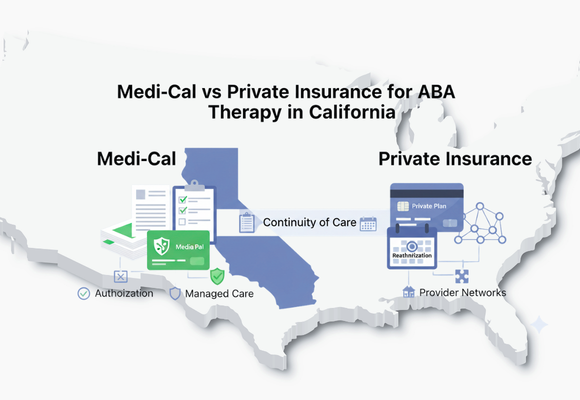
Coverage gaps are one of the quietest ways ABA treatment gets disrupted. A child is making progress, the schedule is stable, the team is in rhythm, and then suddenly sessions pause because coverage changed, eligibility dropped, or an authorization expired. Families often blame the clinic. Clinics often blame the payer. But most of the time, the gap happens because the plan type shifted and nobody adjusted the workflow fast enough.
In California, this shows up constantly because many families move between Medi-Cal and private insurance, or they carry both at different times. Each lane has its own rules, its own timelines, and its own failure points. The goal is not to memorize every policy. The goal is to build a process that catches the risk early and keeps care moving.
Common Causes of Mid-Treatment Coverage Gaps
A gap usually isn’t caused by one big mistake. It’s caused by a small detail that didn’t get tracked.
Common triggers include:
- Eligibility changes: renewal issues, income changes, address changes, plan reassignment
- Plan switches: employer plan changes, carrier changes, moving from Medi-Cal managed care to another plan
- Coordination of Benefits issues: two coverages exist, but primary vs secondary is not updated
- Authorization timing problems: reauth requested too late, wrong department, missing documents
- Provider status changes: network status shifts, rendering provider not linked correctly, NPI mismatch
- Administrative lag: the plan is active, but systems don’t reflect it yet
What this really means is you can be doing excellent clinical work and still be forced into a pause if the operational steps are not aligned with the insurance lane.
Understanding Medi-Cal Coverage for ABA Therapy
Medi-Cal is not one single plan. Most families are enrolled in a managed care plan, and the plan’s processes drive ABA insurance coverage decisions, including approvals and billing behavior. Even when coverage exists, the path is often more structured.
Medi-Cal workflows tend to include:
- A stricter eligibility confirmation cycle
- More frequent plan changes
- Specific requirements around:
- authorizations
- referrals
- approved provider types
- documentation standards
- Longer system update delays after a change is made
Where Medi-Cal gaps show up most
- A family’s plan changes during renewal, and the clinic keeps using the old plan details.
- Eligibility is active, but the managed care plan assignment is pending.
- The clinic starts services based on verbal confirmation but the authorization is not fully loaded.
Understanding ABA Benefits in Private Insurance Plans
Private insurance feels simpler on the surface, but gaps are often harder to predict because the card doesn’t always tell you the full story. Families may switch plans at open enrollment, employers may change carriers, and benefits may reset at the start of the year.
Private plan gaps often come from:
- New deductibles and cost share shifts that families don’t expect
- Plan administrator confusion when a plan is self-funded
- Prior authorization changes after a plan renewal
- Network misunderstandings, especially when a plan has multiple networks
Common Points of Coverage Breakdowns in Private Insurance Plans
- The new plan requires an authorization, but the clinic assumes the old approval carries over.
- The child’s diagnosis or referring provider details need to be revalidated.
- The payer’s system shows the clinic as out of network due to contract mapping issues.
High-Impact Coverage Change: Medi-Cal and Private Insurance Switching
This is where mid-treatment pauses happen most often. The clinic thinks coverage is continuous because the child is still insured, but the requirements reset.
A switch may require:
- A new authorization request
- A new initial assessment approval
- A new treating provider registration
- A new diagnostic documentation packet
- A new primary insurance order if both plans are active
If you don’t treat the switch as a fresh operational case, the claim and authorization trail can break quickly.
A Proven Approach to Maintaining Coverage Continuity
You don’t need a complicated system. You need a repeatable one. Here’s a practical structure clinics can run week after week.
1) Track coverage change signals before they become emergencies
Build a simple coverage risk checkpoint at least monthly, and always before reauthorization.
Key Questions to Identify Coverage Risk Early:
- Did your job change?
- Did your plan renew this month or at year-end?
- Did you receive any letters about Medi-Cal renewal or plan assignment?
- Are you using any secondary insurance now?
2) Verify Eligibility Based on the Coverage Type
Don’t verify active or inactive and stop there. Verify the details that prevent a gap.
For Medi-Cal, confirm:
- Eligibility status and managed care assignment
- Member ID and plan effective dates
- Whether authorization is required for the next period
For private insurance, confirm:
- Effective date, termination date, and plan renewal date
- Network status for:
- clinic
- rendering providers
- ABA prior authorization rules for the next treatment period
3) Keep Reauthorization on a Strict Schedule
Reauthorizations fail mostly because they start too late.
A simple timing rule:
- Start reauth work 30–45 days before the end date
- Require a complete clinical packet before submission
- Track each case by:
- submission date
- pending status
- required follow-ups
- expected decision date
This is also where many teams lean on structured tracking support such as ABA billing services in California to keep dates, documents, and payer responses organized across many active cases, especially when caseloads grow and renewals overlap.
4) Standardize Coordination of Benefits (COB) to Prevent Denials
If a child has two coverages, you need to know which one is primary, and the payer needs to have it recorded correctly.
COB mistakes create gaps because:
- claims deny unexpectedly
- authorizations are tied to the wrong payer
- the plan asks for proof that should have been collected at intake
COB checklist:
- Confirm primary vs secondary in writing when possible
- Ask for any recent insurance letters
- Document effective dates and payer order in the patient file
- Recheck COB at reauth time
5) Implement a Standard Plan Change Procedure
The moment a family reports a change, don’t wait.
Minimum steps:
- Pause promises about start dates or continuation until verification is complete
- Verify the new plan’s lane and authorization requirement
- Collect updated documents:
- front and back of card
- plan letters if Medi-Cal changed
- updated subscriber details
- Open a new authorization workflow if required
FAQs
- Does Medi-Cal cover ABA therapy in California?
Yes, in many cases, but approval depends on the child’s plan, eligibility, and authorization rules. - Can ABA continue if a child switches from Medi-Cal to private insurance?
Yes sometimes, but the new plan may require a fresh authorization before services continue. - Why do sessions stop even when insurance is active?
Because the plan can be active while the authorization is expired, missing, or not updated. - What is the best time to start reauthorization to prevent gaps?
Start 30–45 days before the current authorization end date. - How do coordination of benefits problems cause coverage gaps?
If the primary insurance is listed wrong, claims are denied and services may pause until COB is fixed.
Conclusion
Preventing coverage gaps in ABA therapy depends less on repeated payer follow-up and more on consistent, well-controlled workflows. In California, Medi-Cal and private insurance operate under different administrative requirements, and transitions between them often reset eligibility, authorization, and billing processes. When clinics identify coverage change signals early, verify plan-specific details accurately, initiate reauthorizations within the required timelines, and maintain correct COB, treatment interruptions become more manageable.