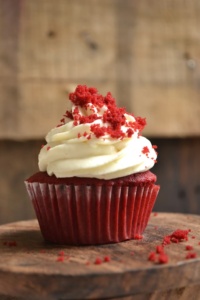
Spend enough time at weddings, corporate functions, or even casual birthday parties, and you’ll start to notice a shift. The towering cake still makes an appearance, sure—but more often than not, it’s the bite-sized desserts that actually disappear first.
Guests hover around dessert tables picking, sampling, and going back for more. Meanwhile, slices of cake are left half-eaten on plates or skipped entirely. It’s not a coincidence. It comes down to how people behave in social settings, what they feel comfortable eating, and how modern events are structured.
Even when people plan ahead—searching online to find cupcakes near me or browsing dessert options for their event—they’re often leaning toward smaller, more flexible choices without even realising it.
Let’s break down why bite-sized desserts consistently outperform full cakes at events, and why they’ve become the go-to option for hosts who actually want their food to be enjoyed.
Convenience Always Wins
At any event, ease matters more than people think.
A full cake requires:
- Cutting
- Serving tools
- Plates and forks
- Someone to manage distribution
It introduces friction. Even if it’s only minor, it slows things down and creates a subtle barrier between guests and the dessert.
Bite-sized desserts remove all of that.
Cupcakes, mini tarts, brownie bites—these are all:
- Pre-portioned
- Easy to grab
- Simple to eat while standing or socialising
There’s no decision-making involved beyond “that looks good, I’ll take one.” And that simplicity is powerful.
Social Settings Change Eating Behaviour
People don’t eat the same way at events as they do at home.
At a party, guests are:
- Talking
- Moving around
- Holding drinks
- Trying not to make a mess
A large slice of cake can feel awkward in that environment. It requires attention. You have to sit down or at least stop what you’re doing.
Bite-sized desserts fit seamlessly into social behaviour. You can eat one in a couple of bites, keep chatting, and move on.
That’s why people often intend to grab cake later—but never quite get around to it.
Variety Beats Commitment
A full cake is a commitment. You get one flavour, one texture, one experience.
Bite-sized desserts open the door to variety.
Guests can:
- Try multiple flavours
- Mix indulgent and lighter options
- Choose based on mood rather than obligation
This taps into something deeper—people enjoy sampling. It feels more interactive and personal.
A dessert table with multiple options naturally draws people in, while a single cake can feel static by comparison.
Portion Control Feels Better
Even at indulgent events, people are still aware of how much they’re eating.
A large slice of cake can feel:
- Too heavy
- Too rich
- Like “too much” after a big meal
Bite-sized desserts solve this without sacrificing enjoyment.
They offer:
- Smaller portions
- Lower perceived indulgence
- The option to have “just one”… or three
Psychologically, that flexibility makes guests more likely to engage with the dessert at all.
Presentation Drives Attention
A full cake can be visually impressive—but once it’s cut, that impact fades quickly.
Bite-sized desserts, on the other hand, are all about presentation from start to finish.
Think about:
- Neatly arranged cupcakes
- Rows of identical mini desserts
- Colour variation across a dessert table
This creates a visual experience that:
- Attracts attention
- Encourages photos
- Feels curated and intentional
In the age of social media, that matters more than ever. People don’t just eat desserts—they notice them.
Less Waste, More Satisfaction
One of the biggest hidden issues with full cakes is waste.
Not everyone wants a slice. Some people:
- Skip dessert entirely
- Only eat half
- Leave it behind
With bite-sized desserts, waste is naturally reduced.
Guests take what they want, when they want it. There’s less pressure to accept a serving, and fewer abandoned plates at the end of the night.
For hosts, this translates to:
- Better value
- Less cleanup
- A stronger sense that the food was actually enjoyed
Flexibility for Dietary Needs
Modern events often involve a mix of dietary requirements:
- Gluten-free
- Vegan
- Dairy-free
- Low sugar
Trying to accommodate all of that with a single cake is tricky.
Bite-sized desserts make it easy.
You can:
- Offer clearly labelled options
- Include alternatives without drawing attention
- Cater to everyone without overcomplicating things
Guests feel considered, and no one is left out or awkwardly declining dessert.
They Fit the Flow of Modern Events
Events today are less formal than they used to be.
People:
- Mingle more
- Move between spaces
- Eat at different times
A scheduled “cake moment” doesn’t always align with that flow.
Bite-sized desserts allow guests to engage on their own terms. There’s no need to pause the event or gather everyone in one place.
Dessert becomes part of the experience, not a separate event within it.
The Experience Feels More Personal
There’s something subtly more personal about choosing your own dessert.
Instead of being handed a slice of cake, guests:
- Browse
- Select
- Interact with the setup
It feels less like a transaction and more like a small moment of discovery.
That’s what makes dessert tables—and especially options like cupcakes—feel more engaging. They invite participation rather than just consumption.
So, Is the Traditional Cake on Its Way Out?
Not entirely.
Cakes still hold value, especially for:
- Ceremonial moments (like weddings)
- Visual centrepieces
- Tradition-driven events
But when it comes to what guests actually eat and enjoy, bite-sized desserts are increasingly leading the way.
A smart approach isn’t necessarily choosing one over the other—it’s understanding the role each plays.
The cake can still be the statement piece.
But if you want guests to engage, enjoy, and remember the dessert side of your event, it’s the smaller, more accessible options that tend to deliver.
Final Thought
At the end of the day, the best event choices are the ones that align with how people actually behave—not how we think they should behave.
And right now, behaviour is leaning toward:
- Convenience
- Variety
- Flexibility
- Experience
Bite-sized desserts tick every one of those boxes.
Which is why, more often than not, they’re the first to Spend enough time at weddings, corporate functions, or even casual birthday parties, and you’ll start to notice a shift. The towering cake still makes an appearance, sure—but more often than not, it’s the bite-sized desserts that actually disappear first.
Guests hover around dessert tables picking, sampling, and going back for more. Meanwhile, slices of cake are left half-eaten on plates or skipped entirely. It’s not a coincidence. It comes down to how people behave in social settings, what they feel comfortable eating, and how modern events are structured.
Even when people plan ahead—searching online to find cupcakes near me or browsing dessert options for their event—they’re often leaning toward smaller, more flexible choices without even realising it.
Let’s break down why bite-sized desserts consistently outperform full cakes at events, and why they’ve become the go-to option for hosts who actually want their food to be enjoyed.
Convenience Always Wins
At any event, ease matters more than people think.
A full cake requires:
- Cutting
- Serving tools
- Plates and forks
- Someone to manage distribution
It introduces friction. Even if it’s only minor, it slows things down and creates a subtle barrier between guests and the dessert.
Bite-sized desserts remove all of that.
Cupcakes, mini tarts, brownie bites—these are all:
- Pre-portioned
- Easy to grab
- Simple to eat while standing or socialising
There’s no decision-making involved beyond “that looks good, I’ll take one.” And that simplicity is powerful.
Social Settings Change Eating Behaviour
People don’t eat the same way at events as they do at home.
At a party, guests are:
- Talking
- Moving around
- Holding drinks
- Trying not to make a mess
A large slice of cake can feel awkward in that environment. It requires attention. You have to sit down or at least stop what you’re doing.
Bite-sized desserts fit seamlessly into social behaviour. You can eat one in a couple of bites, keep chatting, and move on.
That’s why people often intend to grab cake later—but never quite get around to it.
Variety Beats Commitment
A full cake is a commitment. You get one flavour, one texture, one experience.
Bite-sized desserts open the door to variety.
Guests can:
- Try multiple flavours
- Mix indulgent and lighter options
- Choose based on mood rather than obligation
This taps into something deeper—people enjoy sampling. It feels more interactive and personal.
A dessert table with multiple options naturally draws people in, while a single cake can feel static by comparison.
Portion Control Feels Better
Even at indulgent events, people are still aware of how much they’re eating.
A large slice of cake can feel:
- Too heavy
- Too rich
- Like “too much” after a big meal
Bite-sized desserts solve this without sacrificing enjoyment.
They offer:
- Smaller portions
- Lower perceived indulgence
- The option to have “just one”… or three
Psychologically, that flexibility makes guests more likely to engage with the dessert at all.
Presentation Drives Attention
A full cake can be visually impressive—but once it’s cut, that impact fades quickly.
Bite-sized desserts, on the other hand, are all about presentation from start to finish.
Think about:
- Neatly arranged cupcakes
- Rows of identical mini desserts
- Colour variation across a dessert table
This creates a visual experience that:
- Attracts attention
- Encourages photos
- Feels curated and intentional
In the age of social media, that matters more than ever. People don’t just eat desserts—they notice them.
Less Waste, More Satisfaction
One of the biggest hidden issues with full cakes is waste.
Not everyone wants a slice. Some people:
- Skip dessert entirely
- Only eat half
- Leave it behind
With bite-sized desserts, waste is naturally reduced.
Guests take what they want, when they want it. There’s less pressure to accept a serving, and fewer abandoned plates at the end of the night.
For hosts, this translates to:
- Better value
- Less cleanup
- A stronger sense that the food was actually enjoyed
Flexibility for Dietary Needs
Modern events often involve a mix of dietary requirements:
- Gluten-free
- Vegan
- Dairy-free
- Low sugar
Trying to accommodate all of that with a single cake is tricky.
Bite-sized desserts make it easy.
You can:
- Offer clearly labelled options
- Include alternatives without drawing attention
- Cater to everyone without overcomplicating things
Guests feel considered, and no one is left out or awkwardly declining dessert.
They Fit the Flow of Modern Events
Events today are less formal than they used to be.
People:
- Mingle more
- Move between spaces
- Eat at different times
A scheduled “cake moment” doesn’t always align with that flow.
Bite-sized desserts allow guests to engage on their own terms. There’s no need to pause the event or gather everyone in one place.
Dessert becomes part of the experience, not a separate event within it.
The Experience Feels More Personal
There’s something subtly more personal about choosing your own dessert.
Instead of being handed a slice of cake, guests:
- Browse
- Select
- Interact with the setup
It feels less like a transaction and more like a small moment of discovery.
That’s what makes dessert tables—and especially options like cupcakes—feel more engaging. They invite participation rather than just consumption.
So, Is the Traditional Cake on Its Way Out?
Not entirely.
Cakes still hold value, especially for:
- Ceremonial moments (like weddings)
- Visual centrepieces
- Tradition-driven events
But when it comes to what guests actually eat and enjoy, bite-sized desserts are increasingly leading the way.
A smart approach isn’t necessarily choosing one over the other—it’s understanding the role each plays.
The cake can still be the statement piece.
But if you want guests to engage, enjoy, and remember the dessert side of your event, it’s the smaller, more accessible options that tend to deliver.
Final Thought
At the end of the day, the best event choices are the ones that align with how people actually behave—not how we think they should behave.
And right now, behaviour is leaning toward:
- Convenience
- Variety
- Flexibility
- Experience
Bite-sized desserts tick every one of those boxes.
Which is why, more often than not, they’re the first to go.