Top 10 Features to Demand From Any Energy Control System Before You Sign a Contract

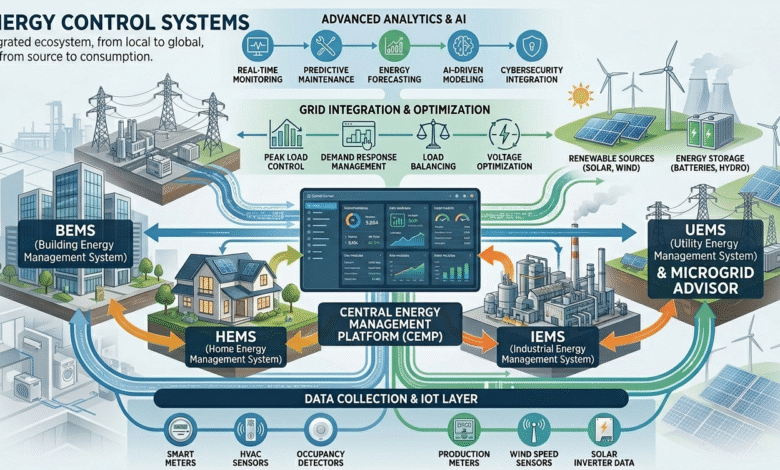
When a facility manager or operations director begins evaluating energy control infrastructure, the process rarely starts with enthusiasm. It usually starts with a problem — an unexplained spike in utility costs, an incident where equipment ran outside its operating parameters, or a maintenance report that revealed how little visibility the team actually had over daily consumption patterns.
The decision to invest in a formal control system carries real operational weight. These systems sit at the intersection of electrical infrastructure, building automation, process management, and financial reporting. A poor fit doesn’t just result in buyer’s remorse — it creates gaps in accountability, complicates compliance, and can introduce safety risks that weren’t there before.
What follows is a practical guide for anyone who has reached the evaluation stage and needs a clear framework for comparing vendors and systems. These are not aspirational features. They are baseline requirements that any serious system should meet before a contract is considered.
1. Real-Time Monitoring With Operational Clarity
The foundation of any functional energy control system is the ability to see what is happening across your facility at any given moment. Not historical summaries, not lagging dashboards — actual real-time data that reflects current load conditions, consumption by zone or asset, and any deviations from expected performance.
What distinguishes effective real-time monitoring from superficial data display is the way information is structured. A dashboard that shows raw numbers without context offers limited operational value. The system should present consumption data in a way that connects readings to specific equipment, circuits, or processes, so that a supervisor can identify an anomaly without needing a separate analysis session.
Organizations evaluating energy control systems should confirm that the monitoring layer is updated at intervals that match operational decision-making needs — not just for reporting, but for active intervention when conditions drift.
What Granularity Actually Means in Practice
Granularity refers to how finely the system can distinguish between energy sources, loads, or time intervals. A system with poor granularity might tell you that a building used a certain amount of power on a given day. A system with adequate granularity tells you which HVAC unit on which floor ran outside its expected range between specific hours, and how that pattern has repeated over the past two weeks.
This level of detail matters when maintenance teams need to make decisions about equipment cycling, when operations teams are trying to reduce peak demand charges, or when compliance documentation requires load-specific records.
2. Demand Response and Load Management Capability
Utility pricing structures have become more complex, and many commercial and industrial facilities now operate under time-of-use rates or participate in demand response programs where reducing consumption during high-demand periods carries direct financial benefit. A control system that cannot interact with these pricing signals is a system that leaves money on the table.
Demand response capability means the system can receive signals — either from a utility provider or from internal scheduling logic — and automatically adjust load priorities without requiring manual intervention. This might involve temporarily reducing non-critical HVAC operation, shifting certain processes to off-peak windows, or shedding lighting loads across areas that are unoccupied.
The Difference Between Scheduled Reduction and Responsive Load Management
Pre-scheduled load reduction is a starting point, but it lacks the adaptability required in real operational environments. Demand peaks don’t always occur when expected, and a system that only follows a fixed schedule will miss opportunities or, worse, create operational disruptions by shedding loads at the wrong time.
Responsive load management uses live data and logic rules to make adjustments based on actual conditions — current load levels, occupancy, equipment status, and external pricing signals. This is the standard that serious procurement teams should require.
3. Integration With Existing Building and Process Infrastructure
A control system that operates in isolation from existing building management systems, SCADA platforms, or process controls creates an information silo. Teams end up managing multiple interfaces, reconciling data from different sources, and making decisions without a unified operational picture.
Integration capability should be confirmed early in the evaluation process, not treated as a configuration detail to address post-installation. Vendors should be able to demonstrate compatibility with the communication protocols your infrastructure already uses, and they should provide documentation on how data flows between systems rather than vague assurances of connectivity.
Protocol Compatibility and Long-Term Maintainability
Industrial and commercial facilities often use a mix of older and newer automation standards. A control system that only supports proprietary protocols or the latest communication standards may not integrate cleanly with legacy equipment that still has years of useful life remaining. This creates a false choice between maintaining operational stability and modernizing energy controls.
According to the International Organization for Standardization, energy management frameworks increasingly emphasize interoperability as a core requirement for sustainable system performance. Vendors who cannot demonstrate multi-protocol support across common industry standards should be treated with caution.
4. Alarm Management and Fault Detection
Control systems that cannot alert operators to abnormal conditions in a structured, prioritized way create operational noise rather than operational clarity. Alarm management is the mechanism by which a system distinguishes between a minor deviation that can be logged and reviewed later, and a fault condition that requires immediate attention.
Poor alarm management is one of the most common causes of operator fatigue and missed critical events in industrial environments. When every notification carries the same visual weight and urgency level, the signals that matter get lost among the ones that don’t.
Structured Escalation and Accountability
A properly configured alarm system routes notifications to the right people based on the type and severity of the condition. A power quality event affecting a production line should reach a different recipient than a minor temperature deviation in a low-priority storage area. The system should also maintain an auditable record of which alerts were triggered, when they were acknowledged, and what actions were taken in response.
5. Reporting and Compliance Documentation
Many facilities operate under regulatory requirements that mandate energy consumption reporting, emissions documentation, or both. A control system that cannot generate structured, verifiable reports from its own data creates additional administrative work and introduces the risk of documentation errors.
Reporting functionality should cover both internal operational reviews and external compliance submissions. The system should allow users to define report parameters, export data in formats that regulators or auditors accept, and retrieve historical records without needing vendor support for routine data access.
6. Scalability Across Facilities or Load Growth
Facilities change over time. Equipment is added, production capacity expands, new buildings come online, or the organization acquires additional sites. A control system that cannot grow with the operation will eventually require replacement — often at a point when operational continuity makes replacement particularly disruptive.
Scalability should be evaluated not just in terms of how many data points the system can monitor, but how the licensing model, hardware architecture, and data infrastructure handle expansion. Some vendors scale gracefully; others treat every addition as a separate implementation project with separate costs.
7. Cybersecurity Architecture
Energy control infrastructure is operational technology, and operational technology is increasingly a target for external threats. A system that lacks basic cybersecurity architecture — role-based access controls, encrypted communications, audit logging, and defined update protocols — represents a risk that extends well beyond energy management.
Procurement teams should request documentation of the vendor’s security framework, including how the system handles remote access, how software updates are delivered, and what mechanisms exist to detect unauthorized access attempts. Security is not an optional add-on at the procurement stage — it is a baseline expectation.
8. Metering Accuracy and Data Integrity
The quality of decisions made using a control system depends entirely on the accuracy of the data it captures. Metering that drifts over time, introduces consistent measurement error, or fails to distinguish between related loads produces a distorted picture of actual consumption — and decisions made on distorted data carry operational and financial consequences.
Before contracting, buyers should understand how the system validates metering accuracy, what the calibration requirements are, and how the system flags data that falls outside expected ranges. Data integrity is not a technical footnote — it is the basis on which every other feature depends.
9. Vendor Support Structure and Response Commitments
The quality of ongoing support is often overlooked during the evaluation phase, when attention is focused on feature sets and pricing. It becomes critically important the first time something fails at an inconvenient hour, or when a configuration change is needed quickly due to an operational shift.
Contracts should define response times, support channel availability, escalation paths, and what level of service is included in the base agreement versus what incurs additional cost. Vague commitments to “responsive support” are not enforceable. Specific service level agreements are.
10. Total Cost Transparency Over the Contract Period
Initial pricing rarely reflects the full cost of operating a control system over its intended lifespan. Software licensing, hardware maintenance, update fees, additional user licenses, and integration support can significantly alter the economic case that appeared compelling during procurement.
Buyers should request a structured breakdown of expected costs across at least a five-year horizon, including what is included in the base contract and what falls outside it. Vendors who are unwilling to provide this transparency at the proposal stage are often the same vendors whose costs expand unexpectedly after implementation.
Closing Considerations Before You Commit
Selecting a control system is not a transaction — it is the beginning of an operational relationship that will shape how your facility manages energy for years. The features outlined here are not a wish list. They are the minimum requirements for a system that can deliver consistent, accountable performance in a real operating environment.
The evaluation process works best when it is structured around operational outcomes rather than feature demonstrations. Ask vendors to show how their system handles a specific scenario your facility actually faces. Request references from similar installations. Review the contract language carefully before any discussion of go-live timelines.
Facilities that take this approach tend to avoid the most common implementation failures — systems that were technically capable but poorly matched to the operational context, or contracts that looked reasonable on the surface but created dependencies that were difficult to exit. The investment in a careful procurement process pays for itself before the first invoice is issued.