The mortgage industry is rapidly evolving. Banks and lenders have predominantly used basic tools to accelerate their operations over the years.
Currently, two primary technologies are driving this transformation: Artificial Intelligence (AI) and regular automation. Knowing the difference between AI vs automation is crucial if we want to improve the lending process for everyone.
What is Standard Automation?
Simply put, standard automation is rule-based. Imagine it as a train that has its tracks fixed. It can only move along the paths where the rails are laid. In mortgage process automation, it usually means replacing the tasks done manually by humans with automated ones.
For instance, when a borrower submits a digital form, automation can transfer that information into a database immediately and accurately. If the data is not what the automation was programmed to expect, it might either give an error or stop. It is excellent in terms of speed and precision when it comes to simple tasks, but it cannot manage unexpected situations.
What is Artificial Intelligence (AI)?
AI is somewhat more advanced. It is not confined to one fixed track. It can be compared to a person driving a car who can choose to take a turn after evaluating the situation on the road. For example, a lender can use AI to interpret such documents, without explicit instructions such as payslips and tax returns is the same way as one who can interpret such documents without any instruction from others.
In fact, it can even recognize/identify patterns and trends that a simple rule-based system will overlook. While traditional automation is concerned with the execution of the task, AI is focused on the reasoning behind it.
The Main Differences in Mortgage Tasks
The clearest way to understand the difference between AI and automation is to look at mortgage tasks on a daily basis.
Data Entry and Movement
Using standard automation for transferring figures from one page to another is a very good solution. For example, if a lender must send an email each time a document is uploaded, the automation will be up to this task. It is not only very fast but also it doesn’t get tired, and it doesn’t make typos.
Reading Documents
That is a strong point of AI. There is a lot of paperwork when a mortgage is applied for. Some documents are oriented sideways, some are not very clear, and many are in different formats. Standard automation will have problems with these and will look for locations in documents to be the same each time to be successful. AI is capable of reading the text, understanding the context, and identifying correct names and dates, etc. even if the document is significantly different.
Spotting Risks
Automation can verify if a credit score is above a certain number. But AI can analyze a borrower’s entire history. It could identify a spending pattern indicating a risk, even if the credit score was okay. It is a more profound level of analysis that assists lenders in making wiser investment decisions.
Why Use Both Together?
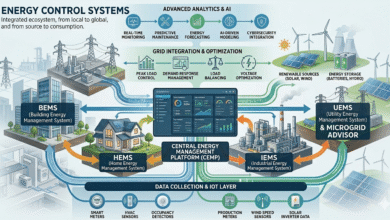
Nowadays, not a lot of lenders simply pick one. To have a fully functioning mortgage process automation system, they combine the two.
Automation is like the base. It deals with the tedious, high-volume tasks that keep the office running smoothly. But, on top of that, AI is used for the more intricate tasks. For instance, while automation can collect all documents into a single folder, AI can go through those documents and check if the income stated matches the borrower’s claim.
Combining the two, the journey to a mortgage can be greatly shortened. Now, some lenders with these two tools working in sync may even be able to give a clear decision within a few days or hours at most.
Improving the Customer Experience
Arguing about AI vs automation is something a loan applicant doesn’t really care about. They simply want to have an easy, quick experience.
If a lender is using mortgage process automation, the client will not have to explain themselves five different times. The system stores the information. With AI, if there happens to be an issue with any of the documents, it can be detected and pointed out right away, so the customer can immediately rectify the mistake, instead of waiting for a week when a human loan officer discovers the error.
This means a lot less stress for a borrower. At the same time, the house buying process is a major life event.
Helping the Staff
One of the common concerns people have about technology is that it might lead to human job losses. But in the mortgage lending sector, the reality is that these technologies usually only alter human tasks. For example, instead of manually keying data for eight hours a day, loan officers could be engaged in customer interactions.
They could assist clients with complicated financial issues or be the ones to introduce and support the first-time buyers. Automation and AI take over the “robotic” tasks, enabling the workers to emphasize the “human” ones.
Managing the Costs
Of course, installing a system like this entails a certain level of expense initially. However, in the long run, it results in considerable savings. Errors in manual processes are not only costly but can even lead to legal issues or losses if a wrong digit is entered during loan processing.
AI, however, is more proactive as it can identify cases of fraud or identity theft long before the loan approval stage.
Looking Ahead
One day, the line between AI and automation might become quite blurred thanks to advancements in technology. Nevertheless, the underlying objective will be unchanged. Lenders seek to complete loan transactions swiftly, minimize operational costs, and ensure adherence to the regulatory framework.
Automating the mortgage process is no longer an exclusive cutting-edge feature of large banks. Even small lenders are taking advantage of this technology to maintain their competitiveness. Going forward, AI is expected to become a better predictor of market fluctuations, thereby assisting lenders in making timely decisions on interest rates.
Conclusion
Although the mortgage process is undeniably a complex one, the technology aiding it need not be overly complicated or difficult to comprehend. Automation is the diligent, rule-following employee, whereas AI is akin to the clever, understanding, and responsive colleague.
Together, these technologies are steering the industry away from paper-laden desks and endless queues.Selecting the right tool for the respective job is probably the most effective way for any lender to thrive in this digital era.